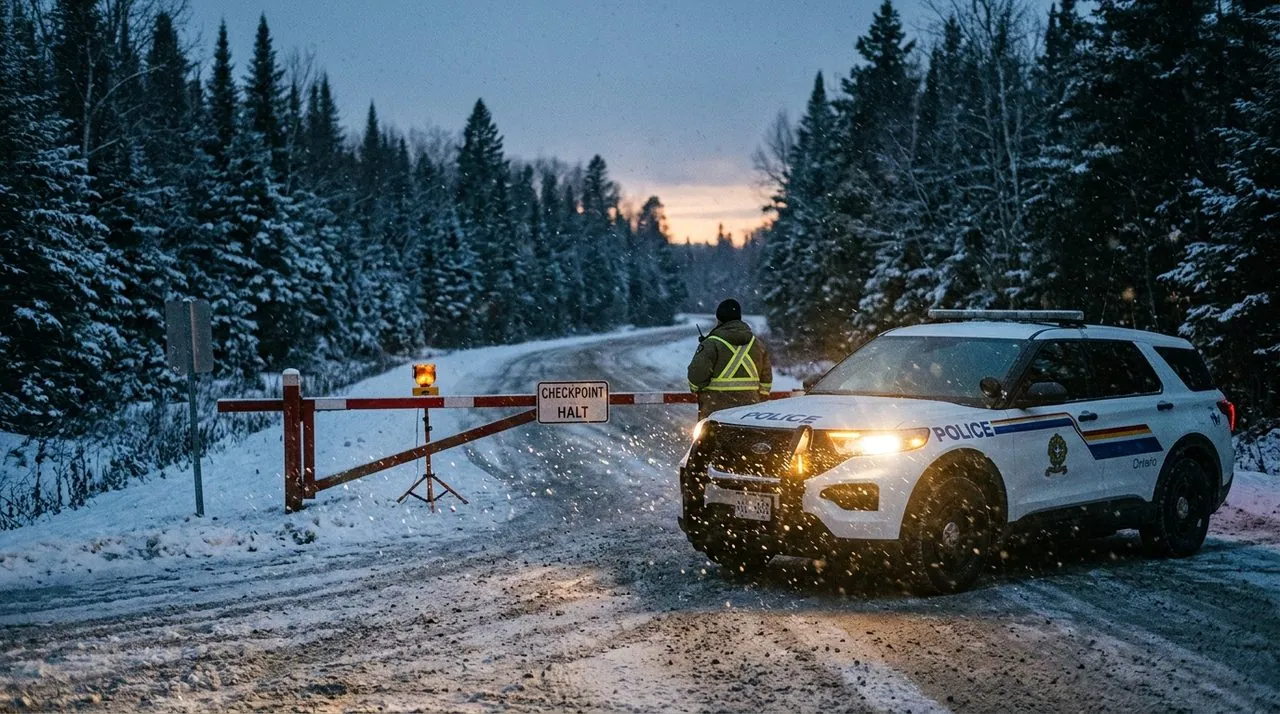
A new border control pilot program aims to prevent the smuggling of alcohol and drugs into five First Nation communities in northern Ontario. The pilot, led by the Nishnawbe Aski Police Service, was launched on Monday as the Nishnawbe Aski Nation continues in a state of emergency over drug trafficking and related violence. NAPS, the largest Indigenous police force in Canada, has recruited special constables from the communities to conduct searches of all travellers entering the five First Nations. The program is based on rules set out by each community’s own Band Council Resolutions. Chief Solomon Atlookan of Eabametoong First Nation, one of the participating communities, said people from the Greater Toronto Area are finding creative ways to smuggle drugs into the remote Ojibway community. "People that we don't know come into the community and make friends with our members, and that's how it’s delivered," Atlookan said. He described drugs being transported by float plane down the river, by truck on winter roads, and concealed on people at the airport where security is limited.
"We have very limited resources and we do what we can to try to prevent all the drugs coming in," Atlookan said. "We've had young people needlessly dying because of that, as well as families [that] are suffering, especially the little kids." He said the program is an important first step, but his community also needs more addiction support. "Right now, we have absolutely nothing except for the nursing station," he said of current services, adding that a local detox centre is not operating as well as it should.
The concept for the dedicated search program dates back to August 2022, when NAN chiefs directed NAPS to develop it. NAN Grand Chief Alvin Fiddler said in a news release that the pilot works because it is community-built. "This works because it is built by communities, for communities, our chiefs mandated it in 2022 because they knew what their communities were facing. But border control should not be a pilot. It should be the standard. Every First Nation in NAN deserves this protection," Fiddler said.
Signage has been installed at airlines that fly into the five communities to inform travellers about potential searches for illegal drugs, paraphernalia, weapons and related contraband. Chief Matthias Anderson of Kasabonika Lake First Nation, another community in the pilot, said the program activated just when it was needed. "We're looking to increase prevention of outsiders coming into our community," Anderson said. He noted that more than a dozen people from the GTA have been banished from Kasabonika Lake since he was elected deputy chief last year. "Most of the people that I expelled seem to be coming from the Toronto area."
Anderson said having special constables from the First Nation helps build trust with community members. That sentiment was echoed by NAPS board chair Frank McKay. "They know their communities and its people and have a vested interest in helping to maintain its safety and security. They want to see a better future for their communities and are committed to be part of that positive change," McKay said in the news release.
Elsewhere in northern Ontario, other First Nations not part of this pilot have also been struggling with an influx of drug traffickers from the GTA. Long Lake #58 and neighbouring Ginoogaming First Nation, both located along Highway 11, have hired an Indigenous-run security company to run checkpoints. A shooting death in Ginoogaming First Nation in October 2025 prompted NAN chiefs to declare a state of emergency over the flow of illegal drugs and deaths in northern communities. Chief Anderson said stories of escalating gun violence in First Nations along the highway are concerning, and while his community has not had drug-related shootings, he worries about escalation if illegal activities continue. As NAN advocates for the pilot to become permanent, Anderson said he hopes it is expanded to other First Nations in the region.