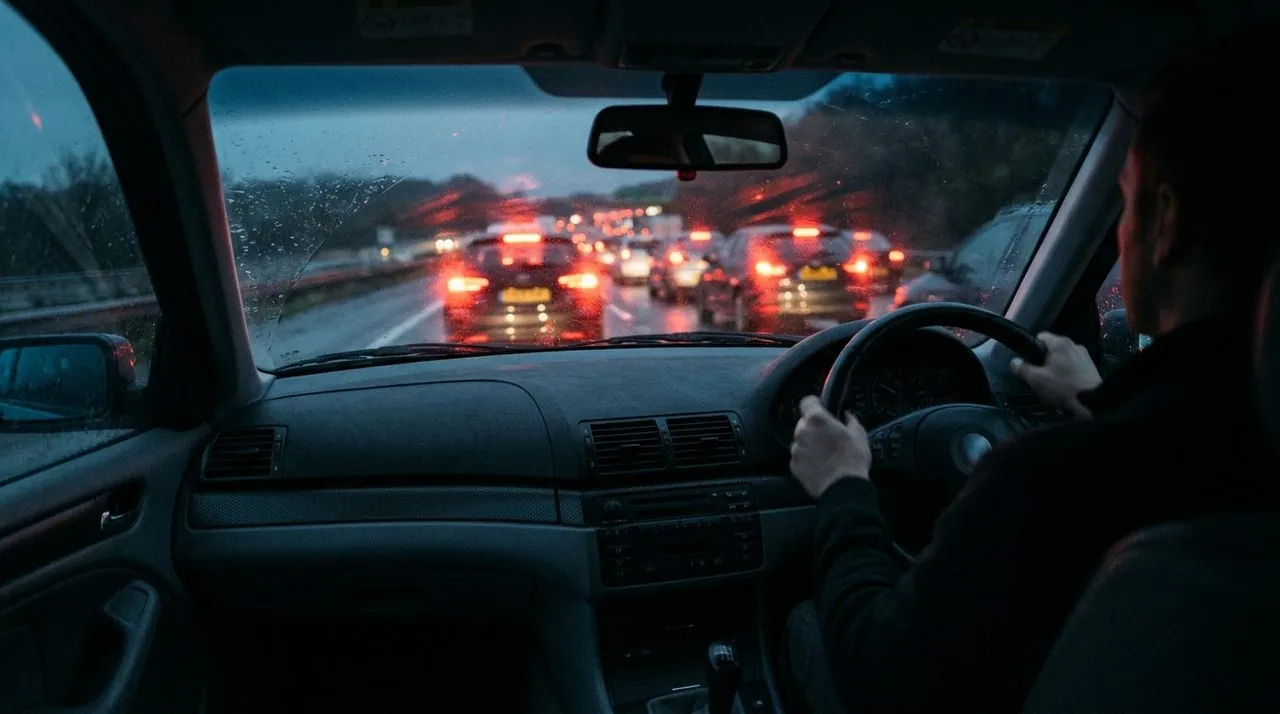
A Tesla driver has been charged with careless driving after an Ontario Provincial Police officer allegedly spotted them asleep behind the wheel on a busy Ottawa highway. The incident occurred on Highway 417 during Tuesday's afternoon rush hour. Police said the officer observed the driver with their eyes closed and hands off the steering wheel. The driver faces a set fine of $490 and six demerit points upon conviction.
The OPP emphasized that drivers must remain attentive even when using automated features. "Even though your vehicle has an autonomous driving feature, drivers are still required to pay due care and attention when behind the wheel," police said in a statement posted to social media. Constable Michael Fathi reiterated the point, stating, "Despite the vehicle being in autonomous mode, a driver must still pay due care and attention to the road." This is at least the fifth instance this year where Canadian police have publicly identified a Tesla driver found sleeping while the vehicle was in motion. In a separate incident on the same highway Tuesday, another driver was charged with careless driving after an officer saw them watching videos on a cellphone in traffic. Police did not specify the make of that vehicle.
The Ottawa case highlights a recurring issue with drivers over-relying on Tesla's "Full Self-Driving" system, which is classified as a Level 2 driver-assist technology requiring constant human supervision. Tesla's website notes that its Autopilot features "require active driver supervision and do not make the vehicle autonomous." The system uses an in-cabin camera to monitor driver attentiveness, but Tesla's owner's manual states the camera "does not require full visibility of the driver’s eyes" and remains active if the driver is wearing sunglasses. Similar incidents have been reported across the country. In 2020, Alberta RCMP criminally charged a Tesla driver caught sleeping while using Autopilot at 150 km/h. British Columbia police have also dealt with multiple cases this year. The problem extends to the United States, where a driver in California told authorities he was asleep on FSD in October when his Tesla drove into a closed crash scene, seriously injuring two officers.
Experts point to "automation complacency" as a key factor, where humans stop monitoring a system that performs correctly most of the time. The penalties within Tesla's system for inattentiveness are considered soft, with five "strikeouts" resulting only in a one-week suspension of FSD privileges. When the car detects drowsiness, its alert reads "Drowsiness detected. Stay focused with FSD," which critics say encourages continued reliance on the system instead of pulling over.
Careless driving in Ontario carries potential penalties beyond the set fine. If a case proceeds to court, the Highway Traffic Act allows for fines up to $2,000, a jail term of up to six months, and a licence suspension of up to two years. Ontario has had a pilot program since 2019 allowing driverless car testing on public roads, but it requires a safety driver to be present and attentive. The National Highway Traffic Safety Administration in the U.S. forced a recall of over 2 million Teslas in December 2023 over concerns about weak Autopilot monitoring. Critics argue the fix lies with manufacturers to implement more strong systems, such as infrared eye-tracking that works with sunglasses, and to program vehicles to pull over safely when a driver is unresponsive.