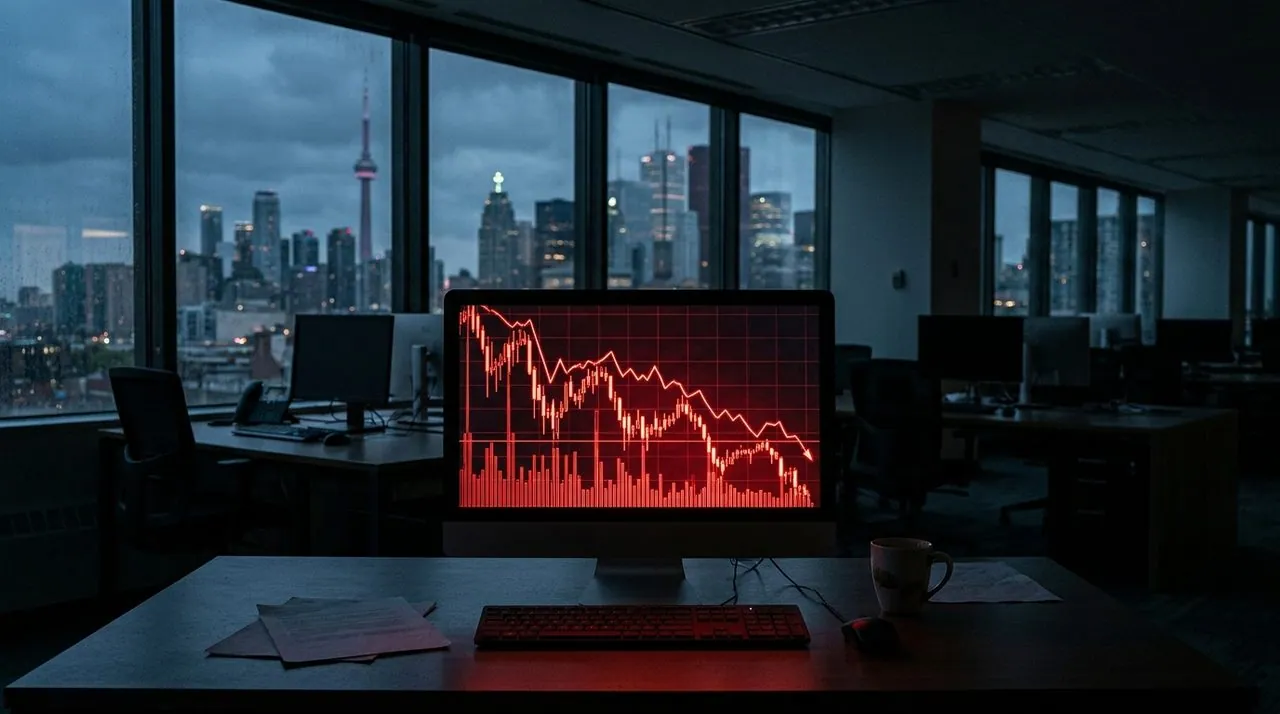
A sharp sell-off in technology stocks sent major North American indices tumbling into correction territory on Friday. The tech-heavy Nasdaq composite index erased all its gains for 2026, capping its worst week since April 2025 with a 5.28 percent drop. The S&P 500 benchmark index fell 3.7 percent, and the Dow Jones industrial average lost 1.93 percent. In Toronto, the S&P/TSX composite index ended the session 2.47 percent lower, also entering a correction.
The Nasdaq's decline wiped out a blistering run-up this year that had been fuelled by investor enthusiasm for artificial intelligence. Shares of Anthropic, the company behind the Claude chatbot, closed 8.5 percent lower on Friday, a reversal from its 17 percent gain on its market debut the day before. Nvidia fell about six percent, while Intel and SpaceX were also among the most influential decliners on the Nasdaq. Tech stock analyst Dan Ives said the fear and anxiety behind the sell-off is akin to levels seen during the COVID-19 pandemic and former U.S. President Donald Trump's so-called Liberation Day tariff announcement last year. He pointed to a perfect storm of factors roiling the tech trade, including a leadership crisis at Nvidia, tighter U.S. controls on China's access to AI chips and fears of a data centre slowdown driven by Democrat victories in recent U.S. elections.
This is a painful tech sell-off that is heavily discounting this fourth Industrial Revolution thesis will take place over the next few years … and that is the wrong move in our view.
Ives wrote that assessment in a note to clients on Friday. AI stocks have been losing ground recently, partly due to investor worries that their market values and massive spending are unjustified. On Friday, Reuters reported that U.S. financial regulators are probing Nvidia's accounting practices, citing two sources briefed on the matter. On Wall Street, Goldman Sachs and heavy equipment-maker Caterpillar led the declines on the Dow Jones, while United Health, Walmart and Johnson & Johnson booked some of the biggest gains. The S&P 500 and the Dow Jones are now in correction territory, defined as a drop of 10 percent or more from their most recent peak.
In Toronto, information technology and materials stocks led the TSX lower. The benchmark Canadian index has slipped about 10 percent since hitting an all-time high in August. With Friday's decline, it booked its steepest weekly drop since April 2025. BCE, Telus and Quebecor were among the most influential stocks making gains as investors digested news about proposed consolidation deals in Canada's telecom sector. The technology sell-off spread around the globe. Japan's Nikkei and South Korea's Kospi indexes each fell more than five percent overnight. European indexes also fell sharply.